Barcelona is the kind of city that rewires your idea of what a city should look like. Antoni Gaudi spent forty years here turning the rules of architecture into something between geometry and dream, the medieval Gothic Quarter sits inside a Roman wall older than the language Catalans now speak, and a 4.5 km Mediterranean beach starts five blocks from the historic center. It is dense, loud, photogenic, and one of the most walkable major cities in Europe.
This is a working guide to the parts of Barcelona that are actually worth your time, organized roughly by neighborhood so you can plan walking routes instead of subway transfers.
Gaudi and Modernisme
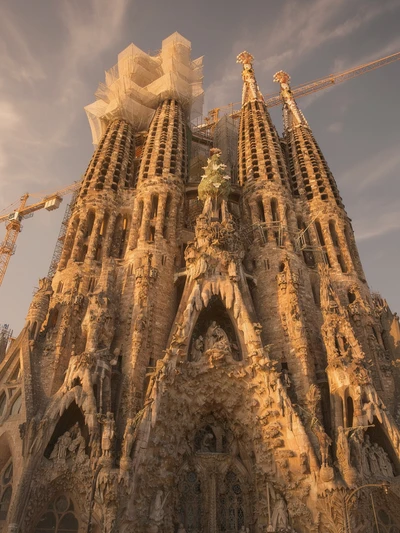
The reason most first-time visitors land in Barcelona is to see Antoni Gaudi's buildings. Gaudi was the most radical voice of Catalan Modernisme, the late-19th-century movement that hit Barcelona around the same time Art Nouveau was reshaping Paris and Vienna. The difference is that Gaudi's work has aged better than almost any of it, partly because he refused to repeat himself.
La Sagrada Familia
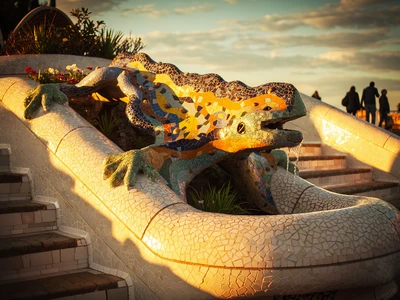
Park Guell
Casa Batllo and Casa Mila
Two blocks apart on the Passeig de Gracia, Casa Batllo and Casa Mila are Gaudi's most accessible domestic works. Casa Batllo (1904) is the smaller, more theatrical of the two, with a facade that reads like the spine of a sea creature and a roof of dragon-scale tiles. Casa Mila (1910), known locally as La Pedrera ("the quarry") for its rough stone facade, has a rooftop terrace of warrior-helmet chimneys that became the signature image of Gaudi's late style. Both are open daily and both have skip-the-line ticket options that are worth the extra few euros in peak season.
The Old City
South of the Eixample grid, Barcelona's old city is a maze of three medieval neighborhoods stitched together: the Barri Gotic, El Born, and El Raval. The Barri Gotic is the oldest, built on top of the Roman colony of Barcino, and the only neighborhood where you can still see surviving Roman wall fragments embedded in the buildings.
Barri Gotic and the Cathedral
The Cathedral of Barcelona (Catedral de la Santa Creu i Santa Eulalia) anchors the Gothic Quarter and shouldn't be confused with the Sagrada Familia, this is the actual seat of the Archbishop of Barcelona, completed in 1448 and free to enter outside service hours. The cloister inside the cathedral keeps thirteen white geese, a tradition dating to the medieval guild that built the church. Around the cathedral, narrow streets like Carrer del Bisbe (with its photogenic neo-Gothic skybridge) and Carrer de la Pietat reward aimless wandering.
El Born and the Picasso Museum
East of the Gothic Quarter across Via Laietana, El Born is the more boutique-and-cocktail-bar half of the old city. The Picasso Museum on Carrer Montcada holds one of the world's most important collections of Picasso's early work, particularly his Blue Period and his teenage drawings. The Basilica de Santa Maria del Mar (1384) at the end of Carrer Montcada is a master class in pure Catalan Gothic and arguably more atmospheric than the cathedral.
La Rambla and La Boqueria
La Rambla is the 1.2 km tree-lined boulevard that runs from Placa de Catalunya down to the harbor. It is touristy, it is crowded, and it is also still genuinely worth walking once for the human-zoo factor: street performers, the historic flower kiosks, the Liceu opera house, and the entrance to La Boqueria, the central market. La Boqueria is the best food market in the country and a legitimate reason to visit on its own. Go early, eat at one of the bar counters inside (Bar Pinotxo, El Quim de la Boqueria), and skip the obvious fruit-cup stands at the entrance.
Beaches and Barceloneta
Barcelona is one of very few European capitals that wakes up next to a working beach. The Barceloneta neighborhood was originally an 18th-century planned grid for fishermen displaced when the Citadel was built, and the long, straight streets still have a different rhythm from the rest of the old city. The 4.5 km of city beaches start at Sant Sebastia and run northeast to Bogatell, with progressively fewer tourists and lower bar prices as you walk away from the W Hotel sail. Barceloneta itself is the place to eat seafood paella for lunch, and Can Sole (open since 1903) is the classic move if you can get a table.
Montjuic
The Montjuic hill on the southern edge of the city carries most of Barcelona's bigger civic monuments. Take the funicular from Paral-lel station up the hill and walk the rest. Top stops include the Magic Fountain (free choreographed water-and-light shows on summer evenings, check the schedule), the Museu Nacional d'Art de Catalunya (MNAC) with its Romanesque mural collection that justifies the trip on its own, the Olympic Stadium and Pool from Barcelona's 1992 games, and the medieval Castell de Montjuic at the summit with views all the way to the airport and the city's container port.
Camp Nou and FC Barcelona
For football fans, Camp Nou is the reason to make the trip out to the Les Corts neighborhood. The stadium is undergoing a major renovation through 2026 and most of its capacity is closed during this time, with the team playing temporarily at the Estadi Olimpic on Montjuic. Check the official FC Barcelona website for current visiting status before planning, the Camp Nou Experience museum tour was paused during the worst of construction.
Food and Drink
Catalan food is its own thing, distinct from the Spanish food you might know from Madrid or Andalucia. Tapas culture exists here but is not as central as it is in southern Spain. Look instead for: pa amb tomaquet (rustic bread rubbed with ripe tomato and olive oil, the unofficial Catalan national dish), bombas (deep-fried potato croquettes invented in Barceloneta), escalivada (cold smoked vegetables), botifarra amb mongetes (sausage and white beans), and crema catalana (the Catalan answer to creme brulee). Vermut on tap at lunchtime is the local rhythm. The Gracia neighborhood north of Diagonal has the densest concentration of small, mostly-local bars.
Day Trips
Two day trips out of Barcelona deserve a mention. Montserrat is the dramatic serrated mountain about an hour northwest by train, with a 1,000-year-old Benedictine monastery, a famous boys' choir that performs at midday on most weekdays, and a network of hiking trails along the ridge. Sitges is a small Mediterranean beach town 35 minutes south, popular with locals for weekend escapes and known for one of the largest LGBTQ communities on the Iberian peninsula.
When to Visit
April through June and September through October are the comfortable months. Summer (July to August) is hot, humid, and crowded, with locals fleeing to the Costa Brava and tourists filling every restaurant. December has a quiet charm and a working Christmas market in front of the cathedral. The shoulder seasons line up well with the bigger civic festivals, La Merce in late September and Sant Jordi (Catalan St. George's Day, with rose and book vendors filling the streets) on April 23.
Getting There
Barcelona-El Prat Airport is 12 km southwest of the city center, with the Aerobus running every 5 minutes to Placa de Catalunya in about 35 minutes. RENFE high-speed AVE trains connect Barcelona Sants station with Madrid in 2.5 hours, with Paris in 6.5 hours via the cross-border line, and with Marseille in 4.5 hours. Once in town, the metro is fast and runs late, walking is faster than the metro for most central trips, and the bicycle-share network (Bicing) is locals-only but several private rental shops cover visitors.
Accommodation
The Eixample is the easiest mid-range base, walkable to most major sights and well-served by the L2, L3, and L5 metro lines. The Gothic Quarter and El Born give you old-city character at the cost of more ambient noise. Gracia is the best neighborhood for a quieter, more local stay if you don't mind a longer walk to the main attractions. Avoid the area around La Rambla itself for sleeping, the noise on the boulevard runs late and pickpocketing is concentrated there.