Lisbon is one of the few European capitals where you can spend a week and still leave the city without having seen everything that matters. Seven hills, a working tram network from 1873, a Moorish castle on top, an Atlantic estuary on the bottom, and a food scene that quietly outclasses Madrid. The 1755 earthquake leveled most of the old city and the Marquês de Pombal rebuilt the lower district on a perfect grid; the upper neighborhoods (Alfama, Mouraria, Castelo) survived intact and still wind around medieval streets where cars cannot fit. The result is a city of contrasts you can walk in two halves, and a coastline 20 minutes by train if you need a break from the cobblestones.
Belém
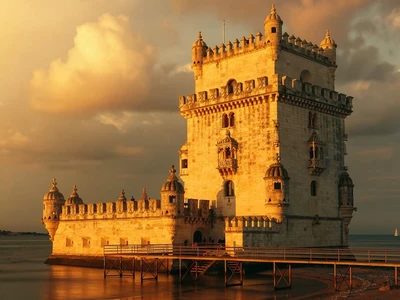
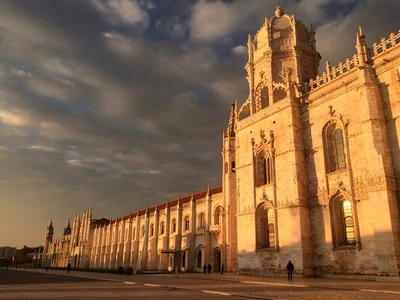
The Belém district sits 6 km west of the center along the Tagus and contains most of the postcard images of Portugal. Three things to make time for:
Belém Tower
Jerónimos Monastery
Pastéis de Belém
The original pastéis de nata recipe, invented by monks at the monastery and sold publicly since 1837 from the same shop two blocks east. The recipe is still a closely held secret. The shop sells over 20,000 pastries a day. There are usually two queues: one for takeaway (fast), one for the cafe sit-down (slow). The takeaway one moves quickly. Eat them warm, with cinnamon and powdered sugar from the table shakers.
The Old Center
The Baixa-Chiado district is the rebuilt grid downtown, the result of the Marquês de Pombal's 18th-century reconstruction after the earthquake. Three squares anchor it.
Praça do Comércio
The grand riverside square, open on the south to the Tagus, with a triumphal arch on the north side leading to the shopping streets. The royal palace stood here until 1755; now it is the symbolic gateway to the city for arrivals coming up from the river. The Pink Street and the bar district sit two streets behind to the west.
Praça Rossio
The wave-pattern cobblestone square in the heart of the old downtown, surrounded by 18th-century facades and the National Theatre. The pavement design is the original "calçada portuguesa" pattern that Lisbon exported to Portugal's former colonies (you see the same waves in Rio's Copacabana boardwalk). The Confeitaria Nacional pastry shop on the corner has been open since 1829.
Bairro Alto and Chiado
Up the hill west of the Baixa, Chiado is the elegant cafe-and-shop district, and Bairro Alto above it is the nightlife district. Chiado holds the historic A Brasileira cafe (Fernando Pessoa's hangout, his bronze statue is still at one of the outdoor tables), Livraria Bertrand (the world's oldest still-operating bookstore, since 1732), and the Time Out Market a few blocks down at Cais do Sodré. Bairro Alto wakes up around 9 PM and runs until 2 or 3 AM, with hundreds of tiny bars in walking distance.
Alfama
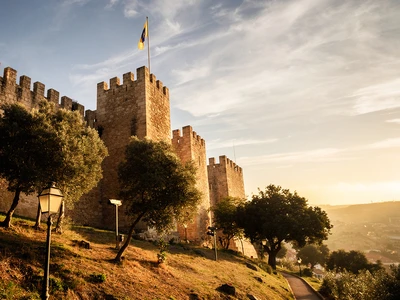
- Castelo de São Jorge. The Moorish castle on top of the hill, with the best panoramic view in the city. Free walking inside the walls; ticketed for the inner archaeological site and the period rooms.
- Sé de Lisboa. The cathedral at the foot of the hill, started in 1147, partially Romanesque and partially Gothic depending on which earthquake hit it last.
- Fado. Alfama is the birthplace of Lisbon-style fado, the melancholic Portuguese folk music. Half a dozen small fado houses around Largo do Chafariz de Dentro run nightly performances; book ahead and expect dinner-with-show pricing. A Baiuca and Tasca do Chico are the two most-recommended for first-timers.
Tram 28 and the Funiculars
The yellow Remodelado tram on Route 28 runs from Martim Moniz through Graça, Alfama, Baixa, and Estrela. It is the most photographed and most pickpocketed transport in Lisbon. Go early in the morning before 9 AM to actually get a seat and avoid the crush. The full one-way ride is about an hour. The three street funiculars (Glória, Bica, Lavra) climb the steeper hills out of the Baixa and are short, scenic rides covered by the standard transit pass. The Bica funicular is the most photogenic, running down a narrow stepped street to the river.
LX Factory
An old industrial complex under the 25 de Abril Bridge in Alcântara, converted in 2008 into a creative quarter of bookshops, restaurants, design studios, co-working spaces, and a Sunday craft market. Ler Devagar is the standout bookstore (multi-story, with a bicycle hanging from the ceiling). Best visited late afternoon for dinner and drinks; the Bridge of San Francisco-style suspension structure overhead is dramatic at night.
Day Trips
Sintra
40 minutes by train from Rossio station, Sintra is a small mountain town an hour from the sea, packed with palaces and former royal estates. The Pena Palace (yellow-and-red Romanticist palace at the top of the hill, very much a fairytale), the Castelo dos Mouros (Moorish ruins along the ridge with the best views), and Quinta da Regaleira (gardens with the famous "Initiation Well" spiral staircase). All three are walkable in a long day if you pace it. The 434 tourist bus loops the major sites; uphill walks are steep.
Cascais
30 minutes by train from Cais do Sodré along the coast. A former fishing village turned royal beach resort in the 19th century; now a small pleasant Atlantic-coast town with a working harbor, a 16th-century citadel, and the Boca do Inferno cliff formation a few kilometers west. Cascais is the closest swim and easier to enjoy in a half-day than Sintra. The bike path between Cascais and Estoril runs along the coast and is flat.
Food and Drink
Portuguese food is mostly fish, mostly grilled, mostly with potatoes. Things to eat in Lisbon:
- Bacalhau in any of the supposedly 365 traditional preparations, classically as bacalhau à brás (shredded with potatoes and eggs)
- Sardines, especially in summer when they are fresh and grilled outdoors during the Santo António festival in June
- Bifana, a thin pork sandwich on a fresh bread roll with mustard, the ubiquitous lunch
- Pastel de nata, the egg custard tart, ideally still warm
- Ginjinha, a sour-cherry liqueur drunk as a shot from chocolate cups at A Ginjinha bar near Rossio (since 1840)
Time Out Market in Cais do Sodré is the curated food hall with stalls from many of the city's better restaurants. Touristy and pricey but the quality is real. The traditional tasca lunch alternative is a small neighborhood place with a printed menu, a bottle of red on the table, and a 10 to 15 EUR daily set.
When to Visit
April through June and September through October are the best months. Temperatures hold in the comfortable 18 to 25 C range, the Atlantic light is golden, and the tourist crowds are lower than midsummer. July and August are hot (32 C is normal) and the city is busy with European holidaymakers; Lisbon does not empty out the way Paris or Barcelona do, but the queues at every tourist site double. November through February is mild and rainy with very low crowds, and the city's interior life (food, fado, museums) is honestly better when you are not fighting tourists for tables.
Getting There
Humberto Delgado Airport is 7 km from the center, with the metro Red Line running directly into Saldanha and Alameda in about 25 minutes. From Madrid, the AVE/Renfe high-speed rail runs in roughly 10 hours; from Porto, the Alfa Pendular fast train runs in about 2.5 hours. Once in town, the metro plus tram plus bus system is covered by the Lisboa Card or a 24-hour Carris zapping ticket; walking is faster than transit for any trip under 2 km, and the hills are real.
Accommodation
For first-time visitors, the Baixa-Chiado area gives you walkable access to almost everything but is the noisiest at night. Alfama is more atmospheric and quieter once you climb above the cathedral. Príncipe Real and Estrela are the leafy, residential alternatives 15 minutes' walk from Bairro Alto. Belém works for travelers focused on the Belém sights and Sintra-Cascais day trips, but is removed from the nightlife. Avoid the Bairro Alto blocks themselves for sleeping unless you genuinely want to be inside the after-dark scene.