Pisa is mostly known for one tower, which is unfair to the rest of the city. The Leaning Tower is the postcard, but the real story is the Piazza dei Miracoli — the "Field of Miracles" — where four world-class Romanesque monuments stand on a bright green lawn next to each other: cathedral, baptistery, bell tower, and cemetery, all built in white Carrara marble between the 11th and 14th centuries. Beyond the piazza, Pisa is a small university city with a working medieval center, the Arno running through it, and Tuscan food at half the price of Florence. Most visitors do Pisa in three hours and miss the rest. Here is what is actually here.
Piazza dei Miracoli
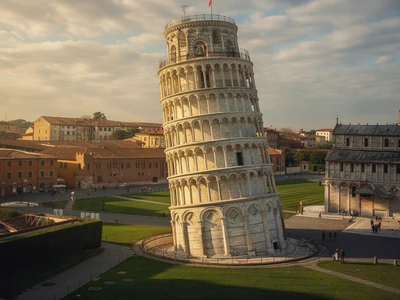
The Piazza dei Miracoli is the entire reason most travelers come to Pisa, and it deserves the trip. UNESCO World Heritage since 1987, the four monuments stand close enough together to walk between in five minutes, and a single combined ticket gets you into the cathedral, baptistery, Camposanto, and the two onsite museums. The Leaning Tower is a separate ticket with a timed entry. Buy both online; same-day in summer is a long queue.
The Leaning Tower
Pisa Cathedral and the Battistero
The cathedral (started 1063) is the centerpiece of the piazza and the model that the tower, baptistery, and the rest were built to match. The bronze door panels by Bonanno Pisano are originals; the carved pulpit by Giovanni Pisano is one of the most important pieces of late medieval Italian sculpture. Free entry but a timed-ticket required to manage flow. The Battistero (started 1152) across the lawn is the largest baptistery in Italy, with extraordinary acoustics — climb to the upper gallery and listen to the security staff sing a chord every half-hour, the resonance lasts about 10 seconds.
Camposanto Monumentale
The walled cemetery on the north side of the piazza is the underrated fourth monument. Inside the long Gothic arcades is what survives of the 14th-century fresco cycle including Buonamico Buffalmacco's "Triumph of Death", restored after Allied bombing damage in 1944. Quiet, atmospheric, and most tourists skip it.
Museo delle Sinopie
Just south of the piazza, this small museum holds the preparatory underdrawings (sinopie) for the Camposanto frescoes, recovered from the walls after the bombing. Quick visit (30 minutes) but a useful counterpart to the Camposanto itself.
Beyond the Piazza
The rest of medieval Pisa is the part most travelers skip. Walk south from the Piazza dei Miracoli through the Borgo Stretto arcades, the main shopping street, to the Arno. The river runs east-west through the city with broad pedestrian quays on both banks, and the small Santa Maria della Spina chapel on the south bank is a perfect pocket of Pisan Gothic.
Piazza dei Cavalieri, two blocks east, was the political center of the medieval republic and is now home to the Scuola Normale Superiore (Italy's most prestigious university). The Vasari-designed facade of the Palazzo della Carovana is the best non-Miracoli architecture in the city. The piazza is also where Pisans actually hang out, distinct from the tourist flow on the Borgo Stretto.
Food
Pisan Tuscan food is the same as the rest of Tuscany, with one regional specialty: cecina, a thick chickpea-flour pancake baked in wood ovens, served by the slice from small bakeries around the Arno. Other local picks: bistecca alla fiorentina (the giant T-bone, charged by weight), pici pasta with meat ragù or wild boar, and panforte for dessert. Avoid the restaurants directly on Piazza dei Miracoli — drift two blocks south or east toward the river and prices halve while quality doubles.
When to Visit
April through June and September through October are the best months. Tuscany hits 20 to 26 C, the queues for the tower halve compared to July and August, and the soft golden Tuscan light makes the marble piazza look exactly like the postcards. Summer is hot and packed; winter is mild but with shorter daylight for photography. The Luminara di San Ranieri festival on June 16 covers the Arno's facades in 70,000 oil candles for one night and is worth timing a visit around.
Getting There
Pisa International Airport (Galileo Galilei) is one of the most convenient airports in Italy: 1.5 km from the city center, with a direct shuttle train (Pisa Mover) running every 8 minutes from the airport to Pisa Centrale station for 5 EUR. From Florence, the direct regional train runs in about an hour for 9 EUR and is the right move for a Pisa day trip. From Pisa Centrale, the Piazza dei Miracoli is a 25-minute walk through the medieval center, or a 10-minute bus on Line LAM Rossa.
Accommodation
For an overnight stay, the streets just south of the Piazza dei Miracoli (around Via Santa Maria) are the most convenient and quiet at night. The area between the river and Piazza dei Cavalieri is more atmospheric and closer to the local food scene. Avoid the strip directly around Pisa Centrale station — modern, soulless, and a 25-minute walk from the main attractions. Most travelers do Pisa as a day trip from Florence and skip the hotel question entirely; staying overnight gets you the empty piazza at 7 AM, which is genuinely the right time to see it.