Vienna spent 600 years as the imperial seat of the Habsburg dynasty and the city is built around that fact. The Ringstrasse loops what used to be the city walls, every major institution along it is a 19th-century imperial monument, and the suburbs are full of palaces and gardens that were once Habsburg country residences. The city is also the historic center of European classical music — Mozart, Beethoven, Schubert, Brahms, and Mahler all lived and worked here — and that musical inheritance still drives the modern cultural scene. The result is one of the most lived-in capitals in Europe: imperial scale, working coffeehouses, a metro that runs to 5 AM, and old wine taverns in the vineyards within the city limits.
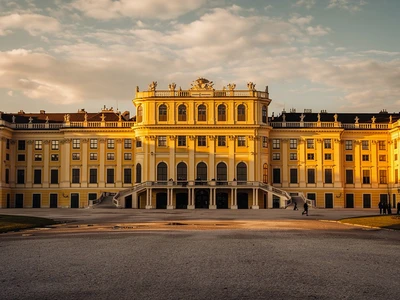
Schönbrunn Palace
The Imperial Center
Inside the Ringstrasse, three sights anchor the historic core.
Hofburg
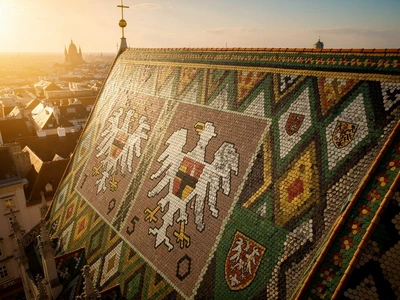
The winter palace of the Habsburgs, now a complex of museums (Sisi Museum, Imperial Apartments, Silver Collection), the Spanish Riding School, the Austrian National Library, and the Federal Chancellery. Allow at least 90 minutes for the Imperial Apartments / Sisi Museum combination ticket. The Spanish Riding School morning training sessions are a separate cheap ticket and a low-effort way to see Lipizzaners actually working.
Stephansdom
The Ringstrasse
The boulevard built on top of the old city walls in the 1860s, lined with the Vienna State Opera, Burgtheater, Parliament, City Hall (Rathaus), the Naturhistorisches Museum, and the Kunsthistorisches Museum, all in walking distance of each other. The Ringstrasse #1 or #2 tram is a cheap way to see all of it in 30 minutes; combine with the Vienna 24-hour transit pass.
Belvedere and Klimt
MuseumsQuartier
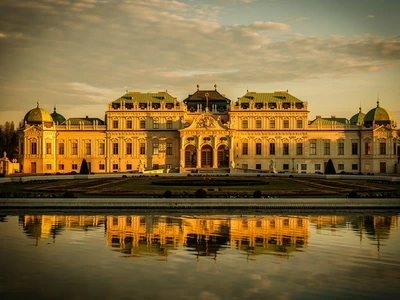
Behind the Hofburg, the former imperial stables were converted in 2001 into one of the largest cultural complexes in Europe. The Leopold Museum (Egon Schiele's largest collection plus more Klimt), MUMOK (modern art), and the central courtyard with its Enzi seating where everyone in Vienna under 30 sits with a beer in summer. Free to walk through, ticketed for the museums.
The Coffeehouse Tradition
Vienna's coffeehouses are UNESCO Intangible Cultural Heritage (since 2011), and the institution still runs by the original rules: order one melange (a milky espresso), sit for as long as you want, read the stack of newspapers chained to the wooden frames, no one will rush you. The historic ones worth visiting:
- Café Central (since 1876) — Trotsky's chess hangout, vaulted ceilings, plaster Trotsky bust, the most photographed
- Café Sacher at the Hotel Sacher — the original Sachertorte recipe (1832), expensive, touristy, worth one slice
- Café Hawelka (since 1939) — bohemian, smoky tradition (now non-smoking), the local writers' hangout for the late 20th century
- Café Landtmann on the Ring — Freud's regular, faces the Burgtheater
Naschmarkt
The 1.5 km open-air market between Karlsplatz and the Vienna River, with food stalls, restaurants, and Saturday flea market sprawl. Modern Vienna eats here on weekend afternoons. Beyond the standard Austrian dishes (Wiener Schnitzel, Tafelspitz, Käsekrainer sausages), the Naschmarkt has the city's best cheap Vietnamese, Lebanese, and Turkish food because of the post-war immigrant population. Open Monday to Saturday; closed Sundays.
The Prater and the Riesenrad
The Wiener Prater is the public park on the Donaukanal side of the city, and the Wurstelprater amusement park inside it has the 1897 Riesenrad — the giant wheel that featured in "The Third Man" (1949). 65 meters tall, 30 enclosed wooden gondolas. Touristy but the city view from the top is genuinely good. Walk from there into the larger Prater forest for a quiet escape from the Ring traffic.
Music
Vienna's classical music scene is the city's actual identity, not a museum piece. The Vienna State Opera runs nightly through the season (September to June) with standing-room tickets sold for 13 EUR an hour before curtain — show up at 5 PM and you can see a 200 EUR seat's view for less than a coffee. The Musikverein hosts the Vienna Philharmonic. The Konzerthaus runs more contemporary programming. The Mozart-and-Strauss tourist concerts marketed in the city center are a different category and not the real thing; if you want the real thing, the Staatsoper standing-room or the Musikverein subscription cycle is where you go.
When to Visit
April through June and September through November are the best months. Spring is mild and the Prater chestnut trees bloom; autumn is sunny, crisp, and the new wine (Sturm) season runs in the vineyard taverns (Heuriger) on the city's western edges. December for the Christmas markets is busy and very cold but visually irresistible. Summer is warm, slightly humid, and the imperial buildings handle the heat better than tourists do; July's Donauinselfest (free) is one of Europe's largest open-air music festivals.
Getting There
Vienna International Airport (Schwechat) is 18 km southeast of the city, with the City Airport Train (CAT) running to Wien Mitte in 16 minutes for 14 EUR or the cheaper S-Bahn S7 in 25 minutes for 4 EUR. From Munich, the Railjet runs in 4 hours; from Prague, 4 hours; from Budapest, 2.5 hours. Once in town, the U-Bahn metro plus tram plus bus combo is excellent and fast — get a 24-, 48-, or 72-hour transit pass on arrival.
Accommodation
Inner-Stadt (the 1st district inside the Ring) is the most walkable and atmospheric base, but the most expensive. Neubau (the 7th district, just outside the Ring near the MuseumsQuartier) is the cool-young-Vienna alternative with better restaurants and lower prices. Leopoldstadt (2nd district, across the Donaukanal) is the up-and-coming neighborhood with the Prater on its doorstep. Avoid hotels far from a U-Bahn stop — the city is large and the metro is what makes it walkable.